Discover the rich history, vibrant culture, and architectural wonders of Morocco’s Red City on this unforgettable Marrakech Sightseeing Tour. Perfect for first-time visitors and culture enthusiasts, this guided tour takes you through the most iconic landmarks and hidden gems of Marrakech, offering a fascinating glimpse into the city’s heritage and daily life.
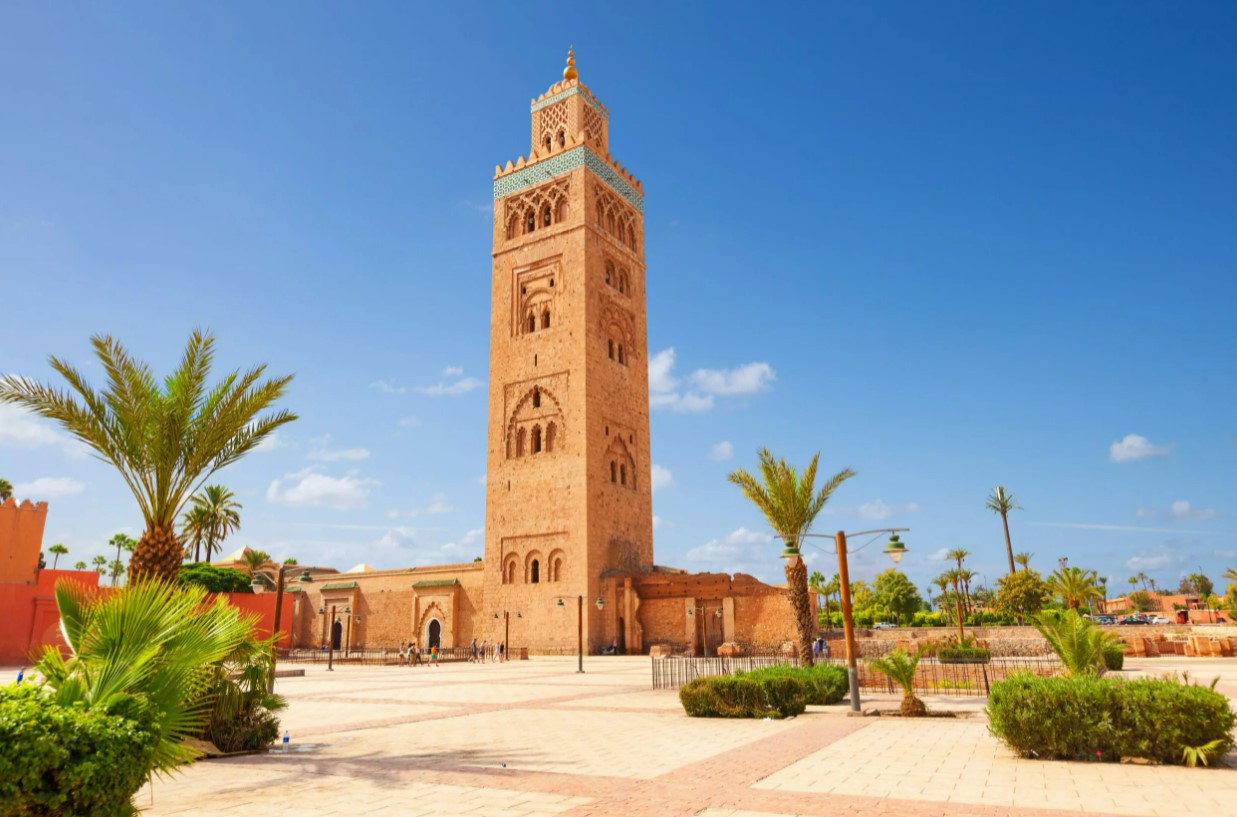
Your adventure begins with a pickup from your hotel or riad, followed by a journey through the historic heart of Marrakech Medina, a UNESCO World Heritage Site. Explore the city’s famous attractions, including the magnificent Koutoubia Mosque, renowned for its impressive minaret that dominates the Marrakech skyline.
Continue your visit to the beautiful Bahia Palace, a masterpiece of Moroccan architecture featuring stunning courtyards, intricate tilework, and lush gardens. Discover the historic Saadian Tombs, one of Marrakech’s most treasured monuments, dating back to the 16th century.
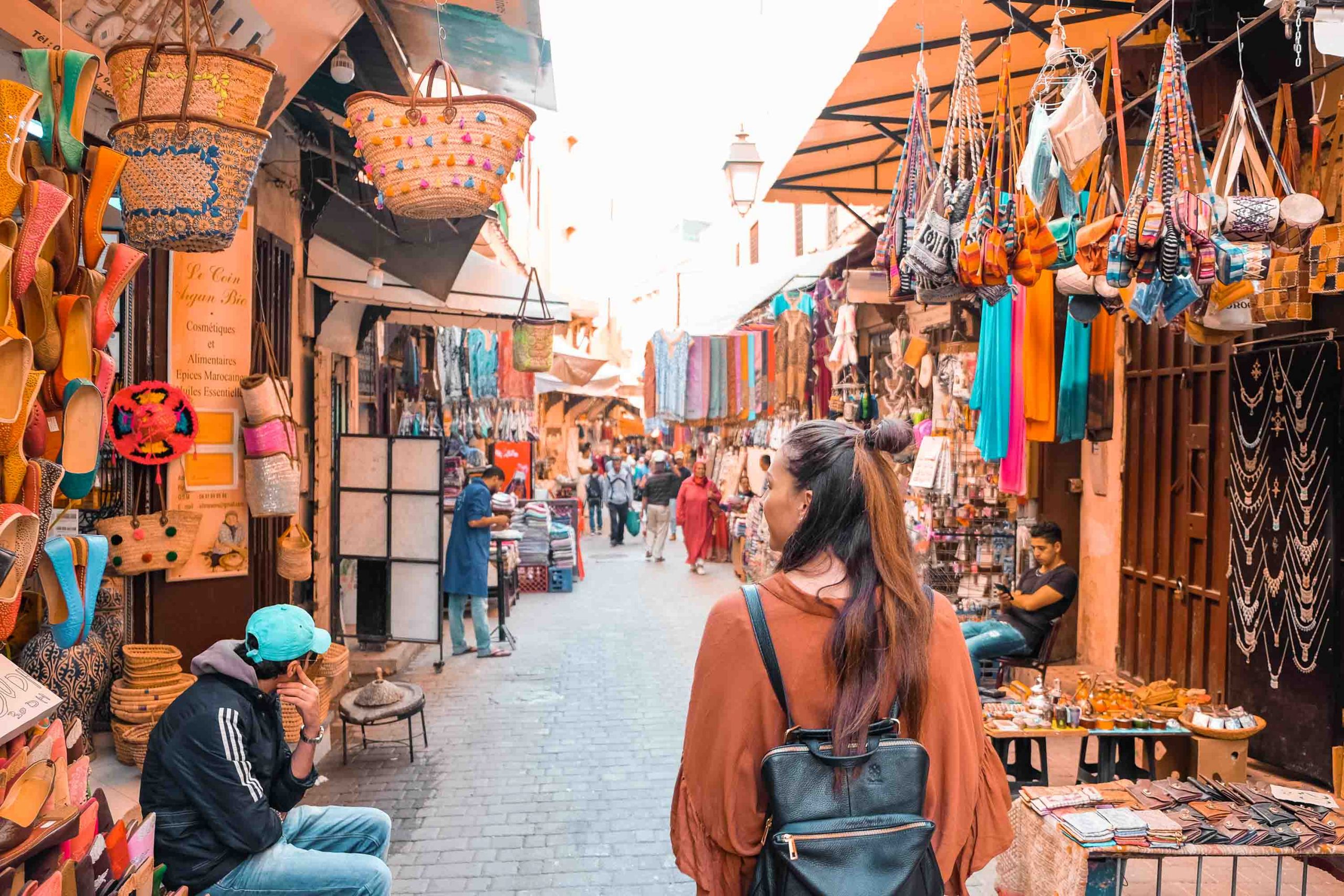
Stroll through the colorful and bustling souks of Marrakech, where artisans sell traditional handicrafts, spices, carpets, leather goods, and local souvenirs. Experience the authentic atmosphere of the city’s vibrant markets and learn about Morocco’s rich artisanal traditions.
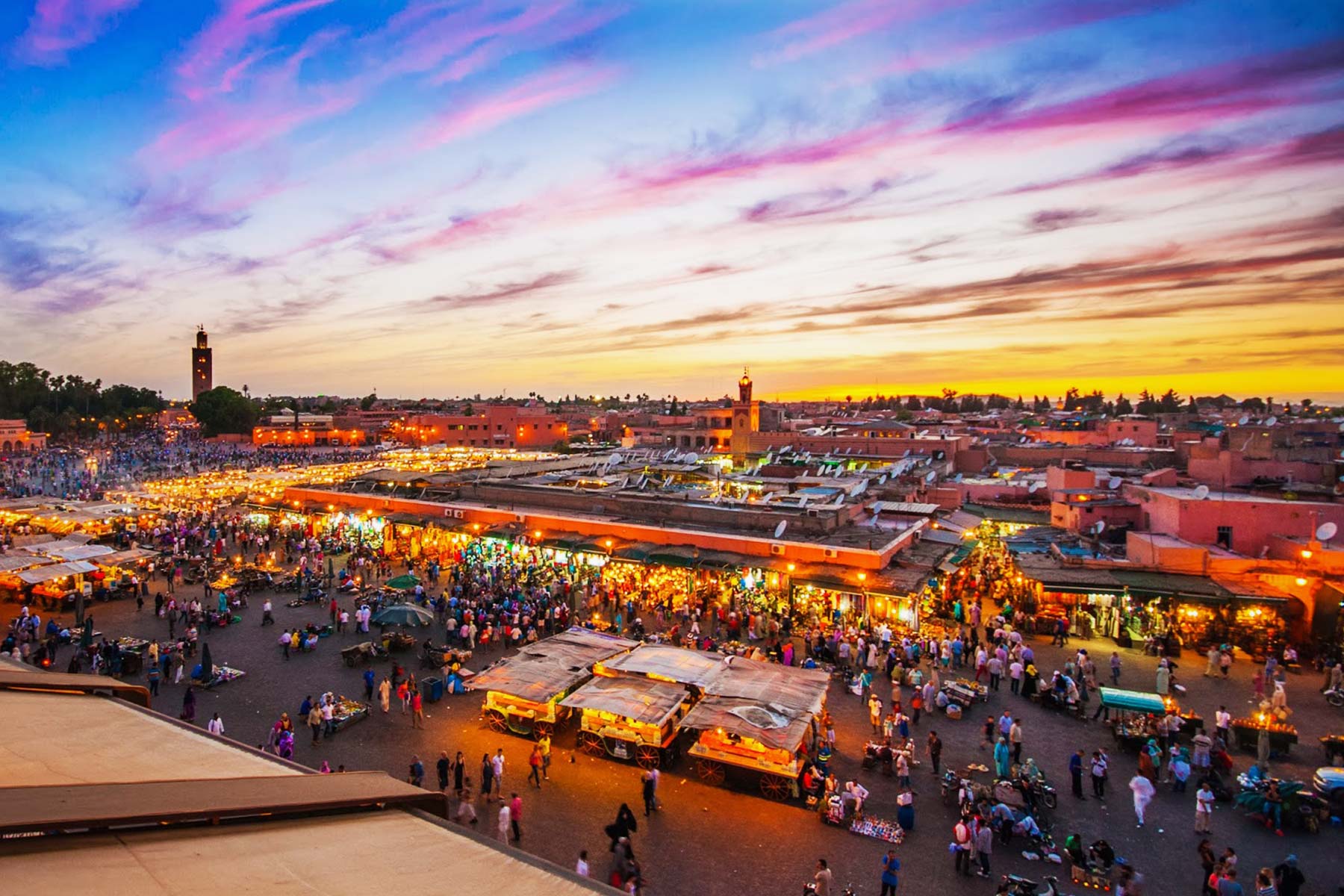
The tour also includes a visit to the legendary Jemaa el-Fnaa Square, the beating heart of Marrakech. Here, you can witness street performers, storytellers, musicians, and food vendors that create the unique energy for which the city is famous.
This Marrakech city tour offers the perfect combination of history, culture, architecture, and local experiences. Whether you’re interested in exploring ancient monuments, shopping in traditional markets, or learning about Moroccan traditions, this sightseeing excursion provides an unforgettable introduction to one of Morocco’s most captivating destinations.
The Marrakech Sightseeing tour, Marrakech is known as the “red city or Al Hamra,” a city in southwestern Morocco within the foothills of the Atlas Mountains. It is the second-largest city and administrative center in Morocco. The heart of Marrakech, Djemma El Fna Square, Marrakech with its souks, gardens, palaces, snake charmers, outdoor food stalls. And fabulous shopping for Moroccan goods is a popular starting for many day trips and desert tours. Marrakech Sightseeing tour.
Firstly, Majorelle Garden is famous for its colorful walkways, ponds, cactus, and plants as well as a beautiful shop with hand-made goods. Secondly, The Majorelle Gardens are a lush, garden estate by Jacque Majorelle and maintained by Yves Saint Laurent. In addition to that, the Majorelle Garden, previously the Jardin Bou Saf. Bears its name from its original creator, Jacques Majorelle. In 1947 he opened his gardens to the public and during this time also painted a magnificent ceiling space at La Mamounia. A five-star hotel in Marrakech. Finally, he built the garden during those years using a special color of blue which he uses extensively in the garden that is named after him, Majorelle Blue.
The largest mosque in Marrakech, Morocco. The minaret was completed under the reign of the Almohad Caliph Yaqub al-Mansur (1184-1199). Also, it was used as the model for the Giralda of Seville and for the Hassan Tower of Rabat. The name is derived from the Arabic al-Koutoubiyyin for the librarian since it used to be surrounded by sellers of manuscripts. It is considered the ultimate structure of its kind. The tower is 69 m (221 ft) in height and has a lateral length of 12.8 m (41 ft). Six rooms (one above the other) constitute the interior; leading around them is a ramp by way of which the muezzin could ride up to the balcony. It is built in a traditional Almohad style and the tower is adorned with four copper globes.
The El Bahia Palace in Marrakech is a beautiful building. Indeed, an excellent example of Eastern Architecture from the 19th century. Clearly, it represents the trends and standards of the wealthy who lived at that time. It was built for Ahmed Ibn Moussa (or Ba Ahmed) between 1894 and 1900 in the Alawi style that was popular at the time.
Craftsmen were brought from Fes to work on this monumental task which took approximately fifteen years to complete. It is said that the palace was built as a home for Ba Ahmed’s official concubines. Moreover, it has also been said that the importance or favor of each concubine increased along with the size of their bedroom. In fact, the name ‘Bahia’ means ‘palace of the beautiful. There are 160 different rooms in the palace which are sprawled out in an open, rambling fashion. Decorations take the form of subtle stucco panels, zellij decorations, tiled floors, smooth arches, carved-cedar ceilings, and shiny marble (talk) finishes. Besides, oak-painted ceilings. The palace is surrounded by an eight-hectare garden.
The Ben Youssef Medersa was established by Sultan ” Abou el Hassan (1331–49) but rebuilt in the 1560s, under the Saadians. The school is where students learn the Koran by rote and is the most beautifully decorated building in Marrakesh. With lashings of classic Moroccan decor – zellij tiling, stucco plasterwork, carved cedarwood – all worked to the very highest standards.
The central courtyard, its carved cedarwood lintels weathered almost flat on the most exposed side, is unusually large. Along two sides run wide, sturdy, columned arcades. They were probably zero using it to supplement the space for teaching in the neighboring mosque. Above them are some of the windows of the dormitory quarters, which are reached by stairs from the entry vestibule, and from which you can get an interesting perspective – and attempt to fathom how over eight hundred students were once housed in the building. One room is furnished as it would have been when in use.
The Saadian tombs in Marrakech date back to the time of the sultan Ahmad al-Mansur (1578-1603). Firstly, the tombs were only recently discovered (in 1917) and were restored by the Beaux-arts service. Secondly, the tombs have, because of the beauty of their decoration, been a major attraction for visitors to Marrakech. Finally, the mausoleum comprises the corpses of about sixty members of the Saadi Dynasty that originated in the valley of the Draa River.
Moulay Abdallah founded it in 1558, the Mellah district was designated as the Jewish quarter in Marrakech. Furthermore, at the time of the Spanish religious wars, Jewish refugees were escaping the country and were offered this little piece of security by the Sultan.
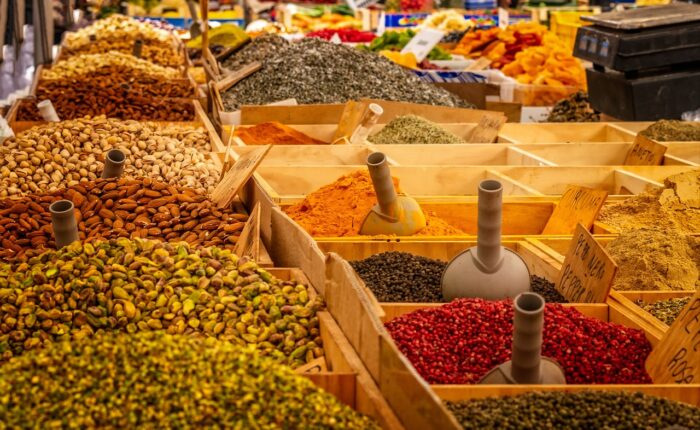
The Rahba Kadima is a colorful market filled with a wide array of spices from Cumin, Cinnamon, Saffron, Dried Pepper, and more.
A private museum in Marrakech that is dedicated to popular arts & crafts, in the shape of a beautiful Spanish-Moroccan house, next door to Dar Si Said palace. In fact, it is a smaller version of the Bahia.
A fantastic way to discover Marrakech. Our guide was knowledgeable, and we visited all the major attractions in one day.
The perfect introduction to Marrakech. The Medina, palaces, and gardens were absolutely beautiful.”
The sightseeing tour typically lasts between 3 and 6 hours, depending on the itinerary.
es, a professional local guide is included to provide insights into Marrakech’s history and culture.
Comfortable clothing and walking shoes are recommended.
This depends on the selected tour package. Please check the tour details before booking.
Yes, the Marrakech Sightseeing Tour is suitable for families, couples, and solo travelers.